
Day 3 – 4 July 2026
Gosty Hill Tunnel to Hawne Basin
Hamish the Springer and I decided to head out while Bab was still snoring in bed, hoping to tackle the other side of Gosty Hill Tunnel through to the end of Dudley No. 2 Canal at Hawne Basin. One more section ticked off the list, I thought. Simple. Straightforward. Famous last words, obviously.
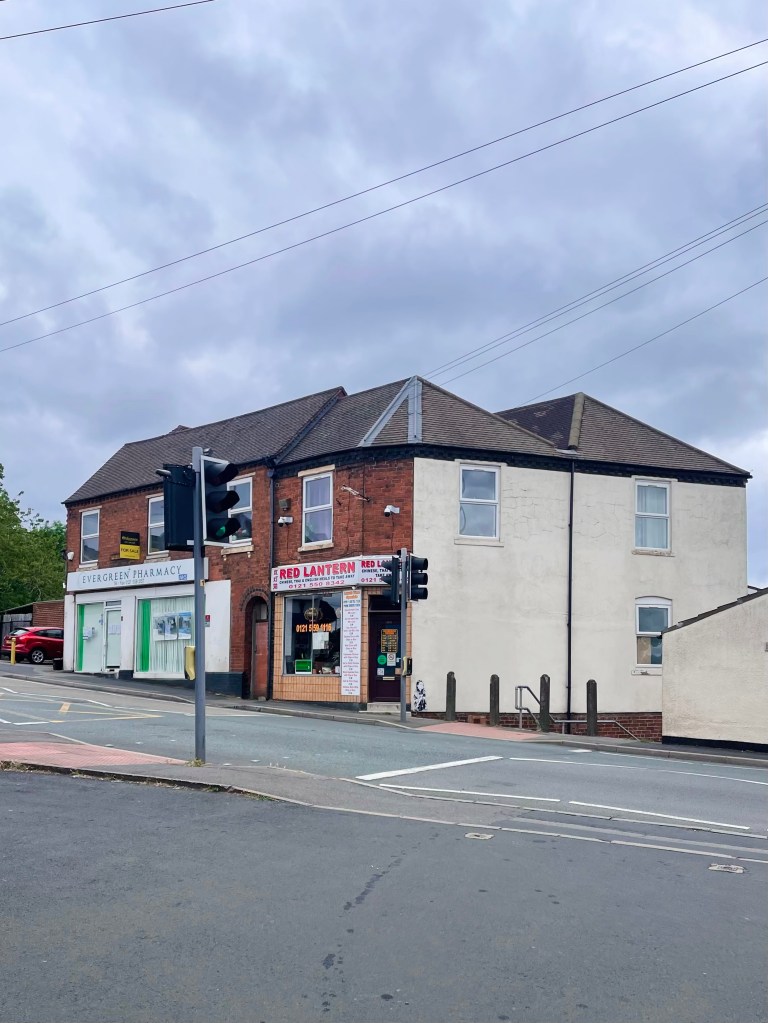
We wended our way through Lye and Halesowen to a nondescript industrial estate just off Dudley Road. “This can’t be Hawne Basin,” I muttered to an enthusiastic Springer hanging his head out of the window, clearly on the sniff for ducks, geese and poor decisions. At that time on a Saturday morning, the silent, deserted estate felt like we’d wandered onto the set of Dawn of the Dead – or, more accurately, Kev of the Dead, where a zombie Black Country fisherman chases you down muttering about scratchings, Bathams and blood.
Then, up a dead end beside a frankly misleading “Café now open” sign, we spied boats. Actual canal boats, in an actual basin. Sadly, they were on the wrong side of a gate, which is exactly where gates like to put things you want to look at.
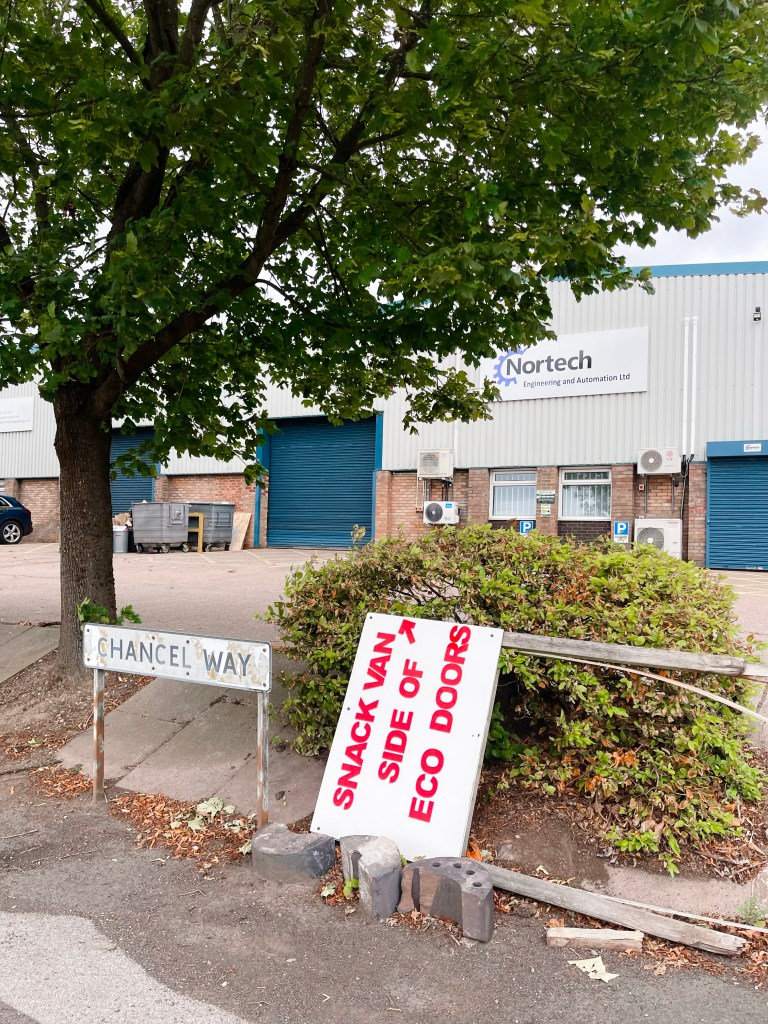


As Hamish and I discussed the perils of scaling metal railings, Bab rang, rather miffed that we’d left without him and without so much as a note. After some careful negotiation – the United Nations would have been proud – he told us to come home, and we’d go back and work it out together. So off we skulked, tails between legs; in Hamish’s case, quite literally. A false start, yes, but with the promise of an additional navigator.
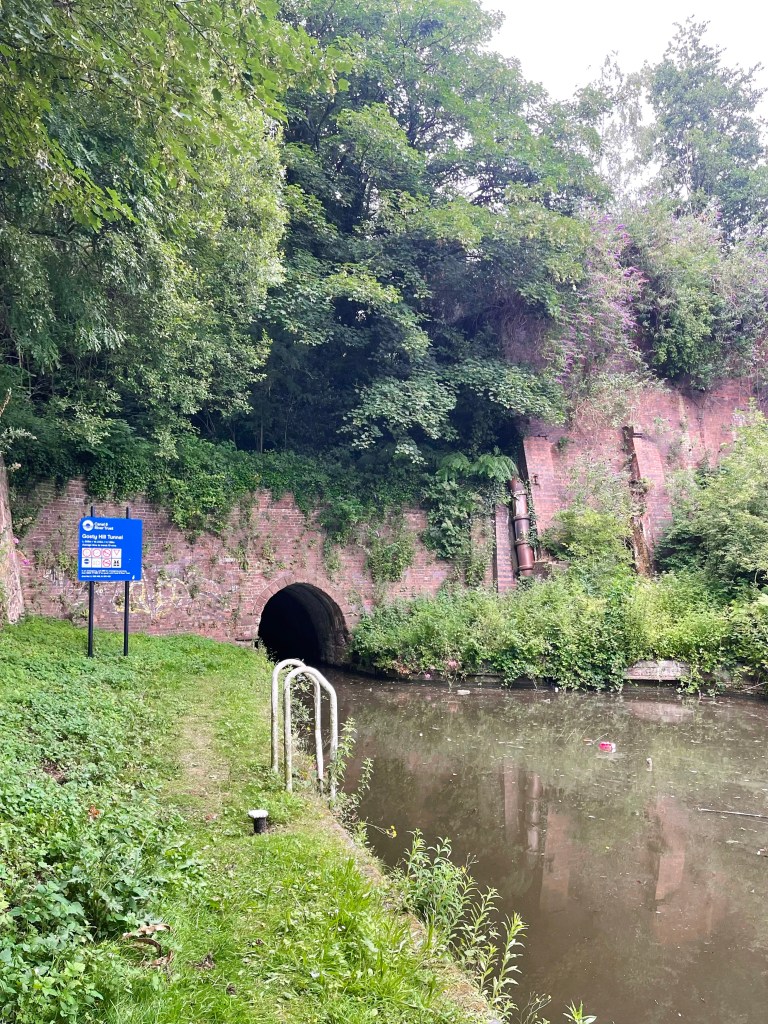
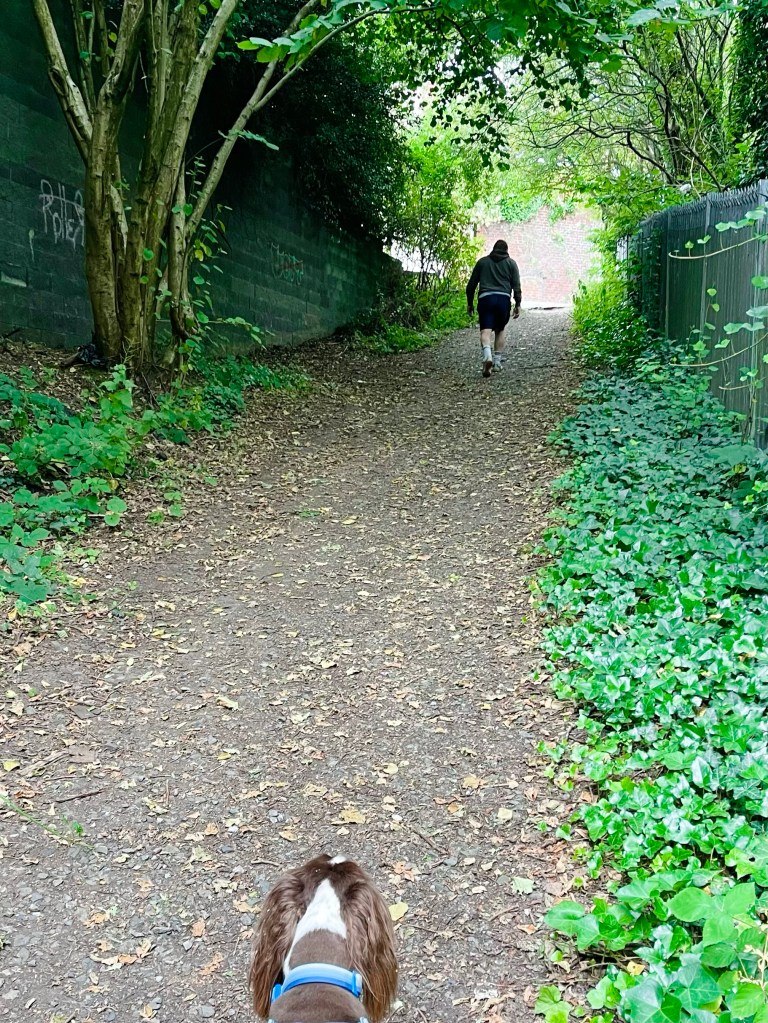
Our second attempt began at the other end of Gosty Hill Tunnel and, this time, we successfully made it dahn tha cut. A miracle. While Bab sorted out somewhere sensible to park the car, Hamish and I found our way down: first steps, then slope, then steps again, until we landed on the towpath at the other side of the tunnel.


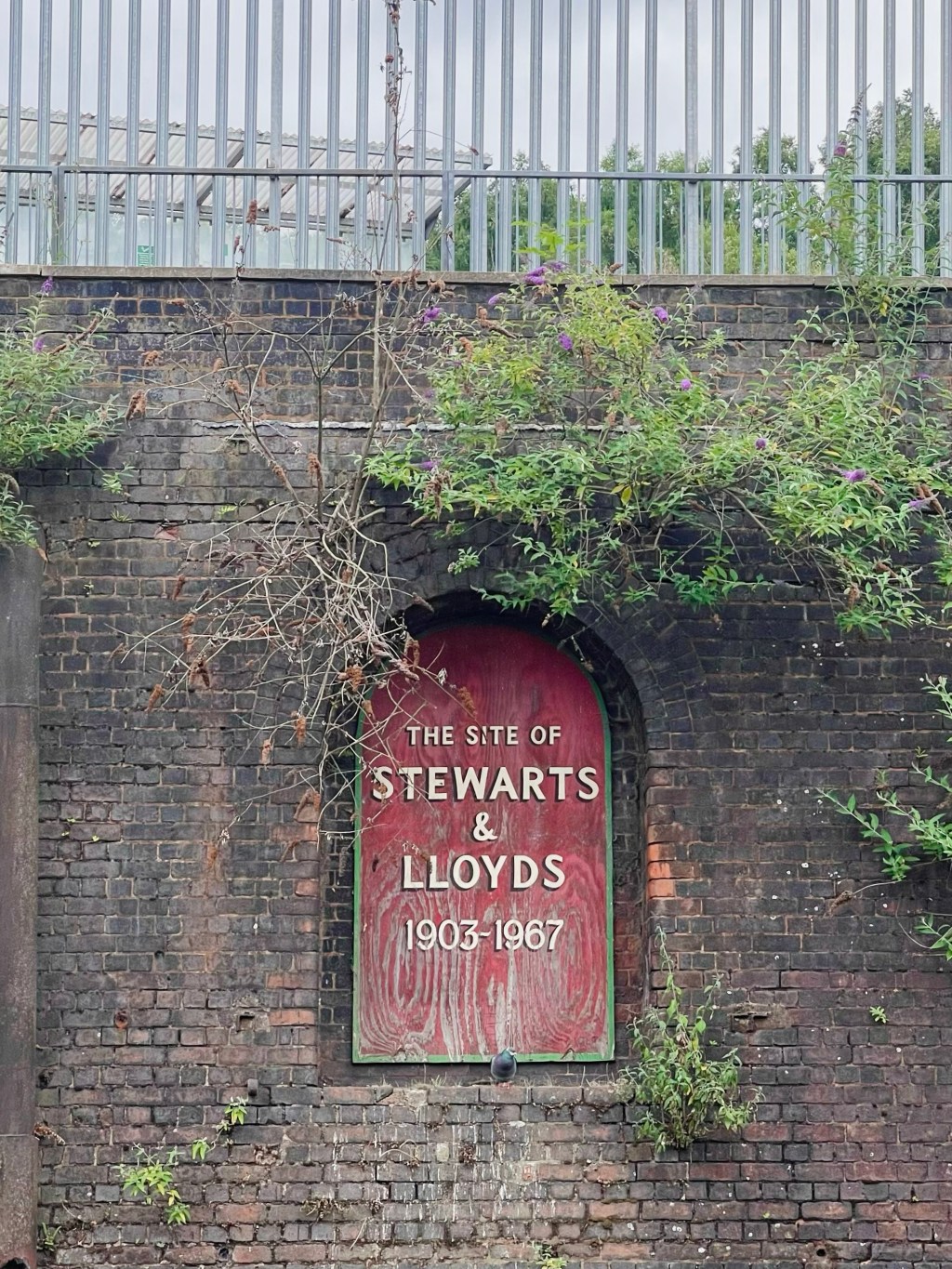
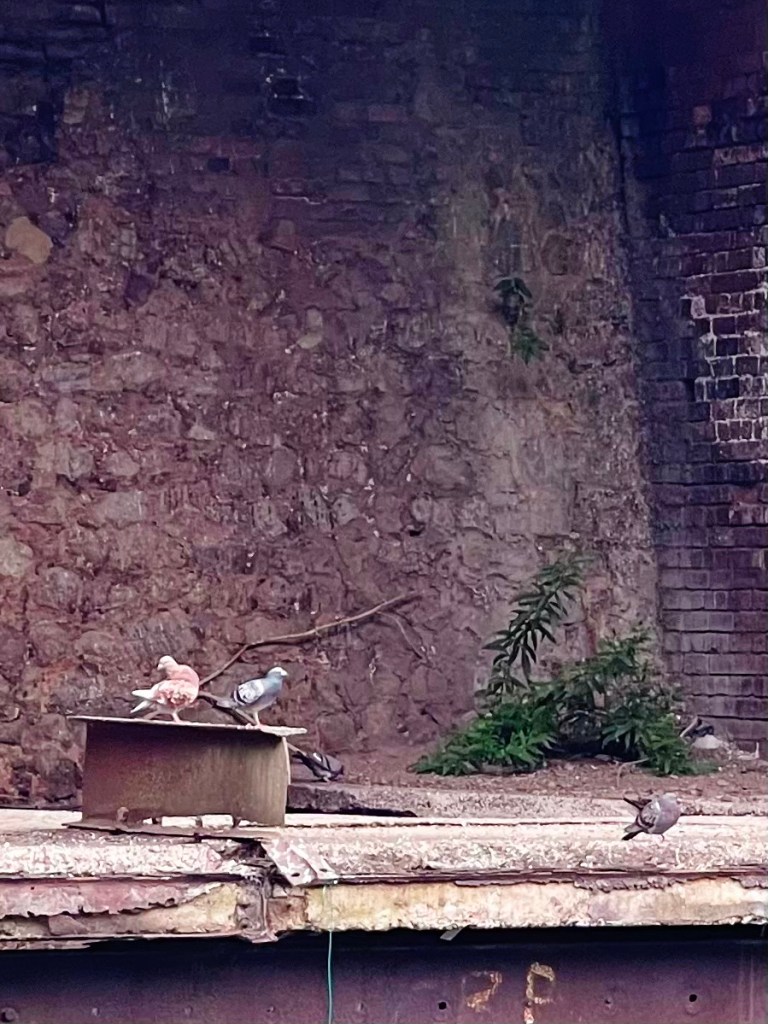
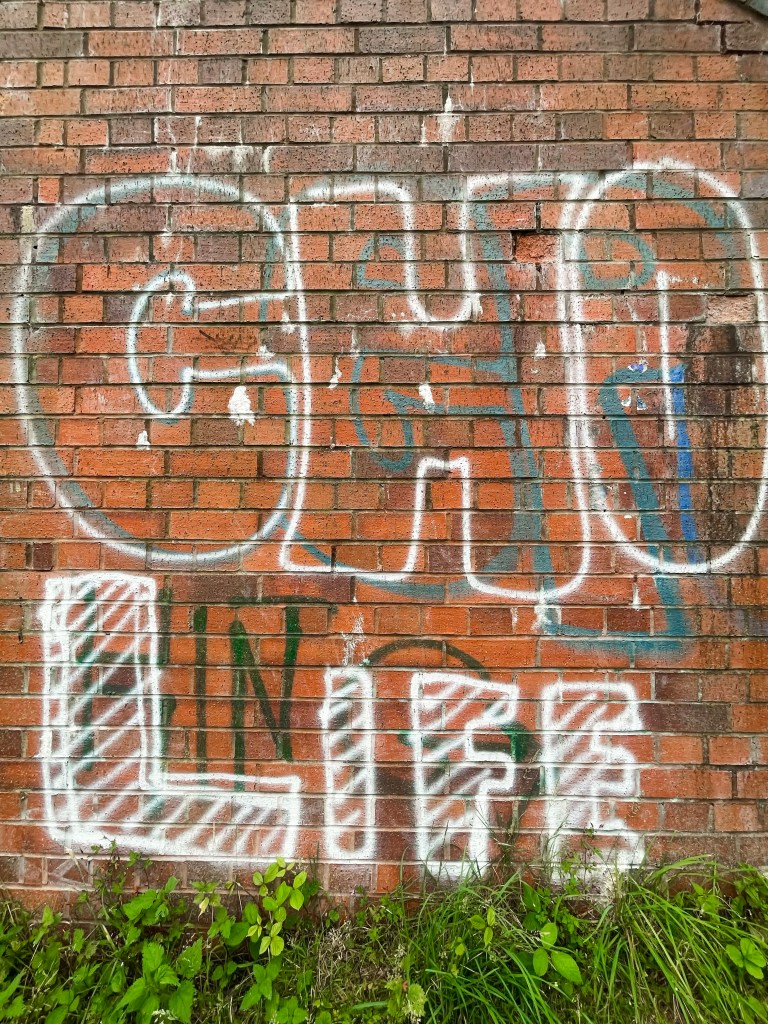
This side of the tunnel felt less dramatic: a smaller exit, riffy* and slightly smelly water, and not quite the grand reveal I’d imagined. I was expecting theatre; I got damp brick and Eau de Canal. The saving grace was the exposed brickwork and archways of the old Stewarts & Lloyds steel works, with more of it appearing as we carried on walking. The archways are now home to resting pigeons, who watched us with boredom and disdain as I snapped yet more photos of bricks, graffiti and weeds. I am nothing if not consistent.

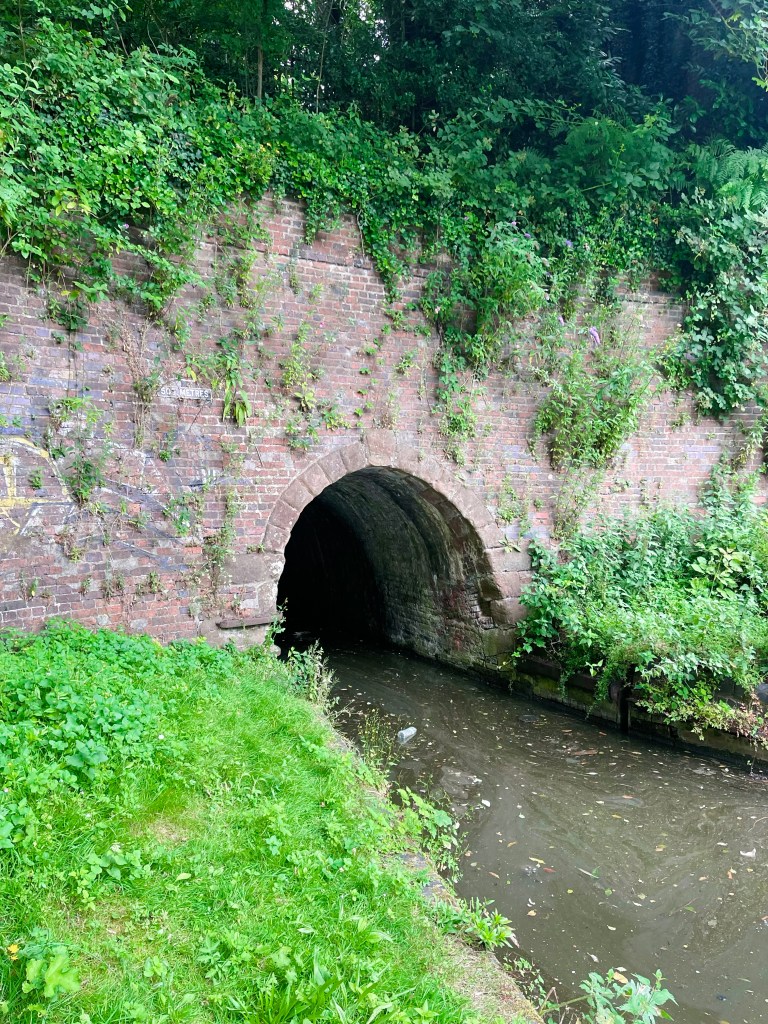



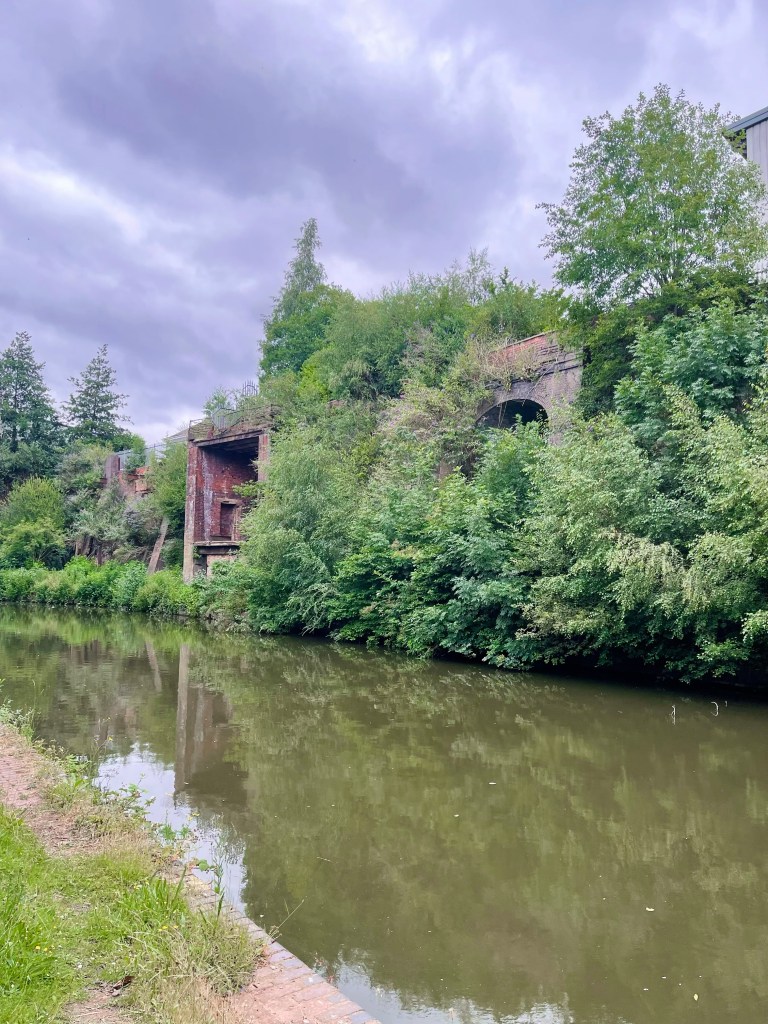




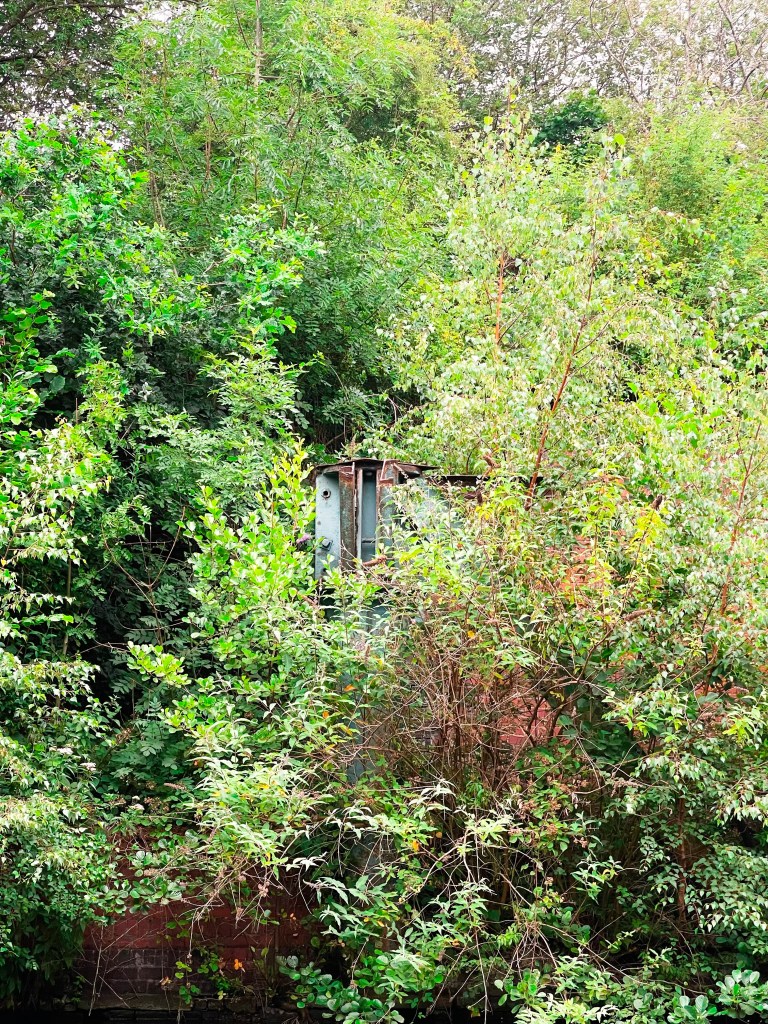
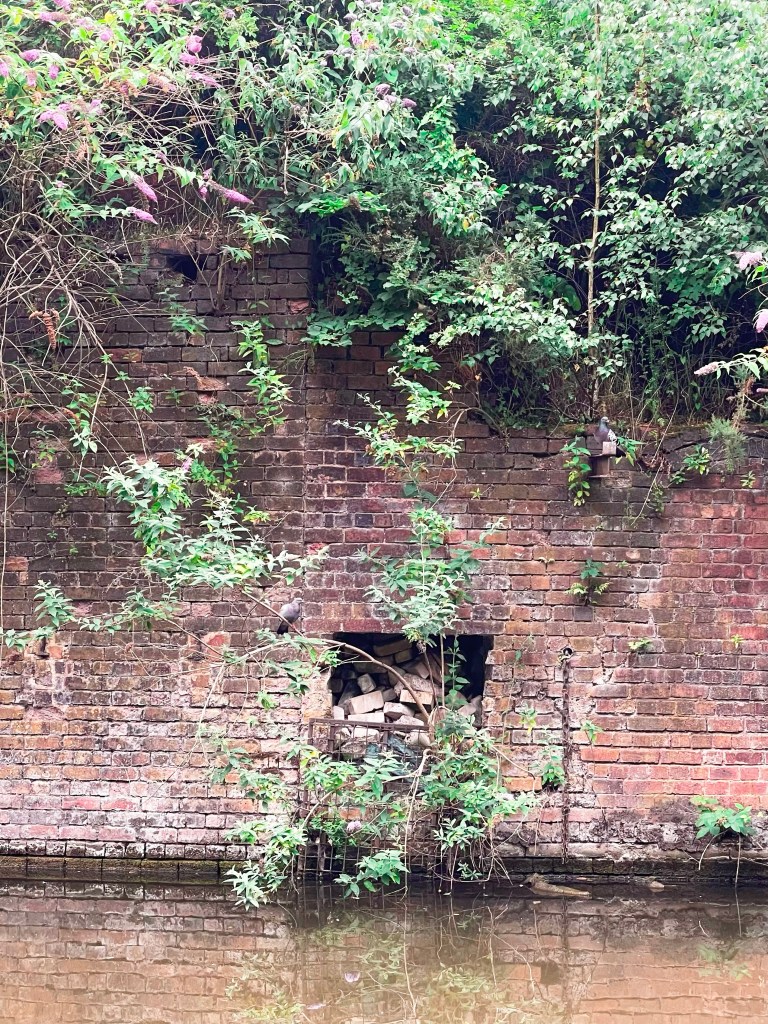
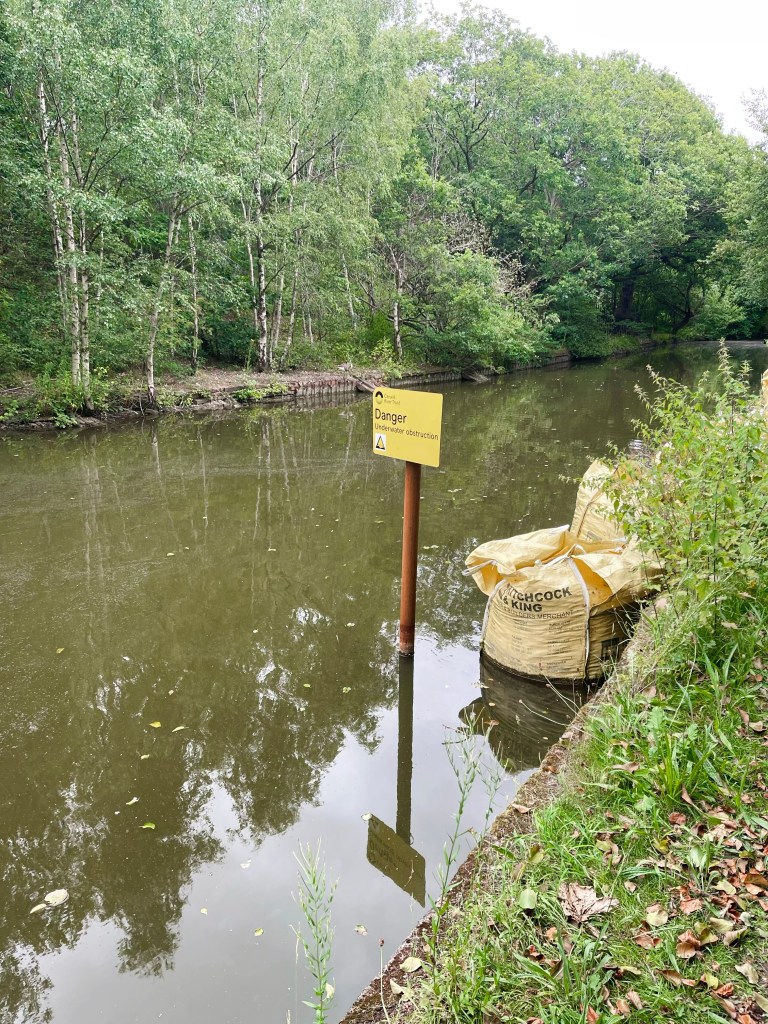
Further on, we found signs of an obstruction in the water, with bags of builders’ rubble strategically placed – I presume to highlight the danger, or at least to say, “Mind out, bab.” Beyond this, on the other side of the canal, were the remains of the ramps where the Stewarts & Lloyds boats were once launched sideways into the water. This was the site of a large open boat dock where the fleet of boats and tugs were maintained.

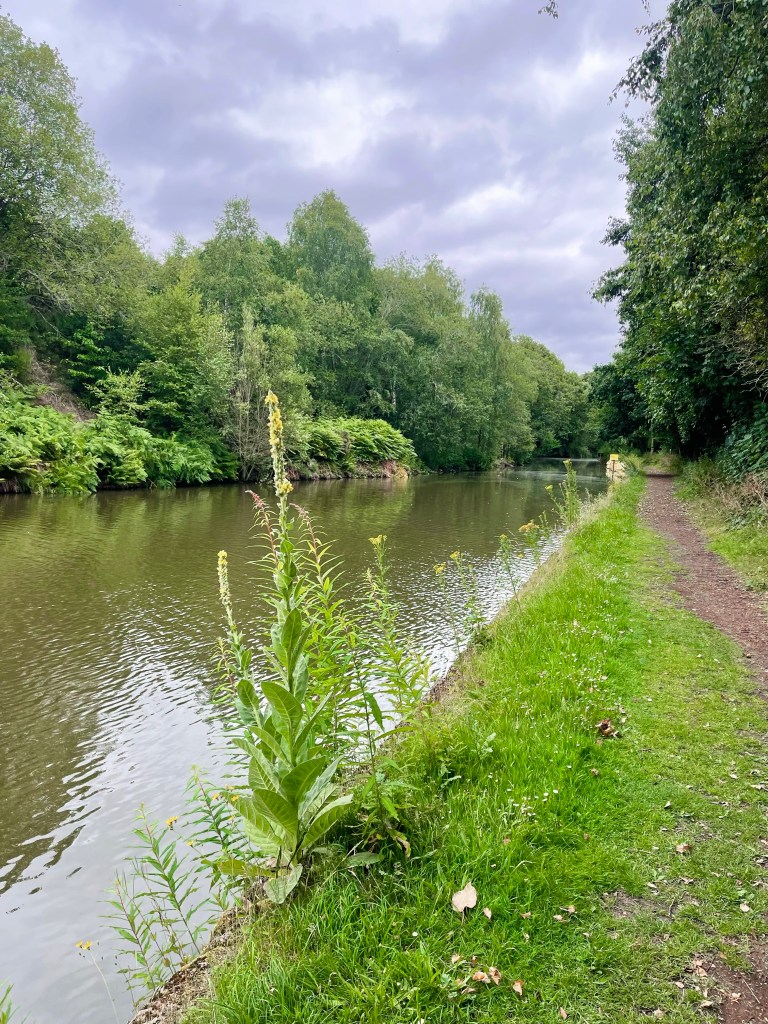
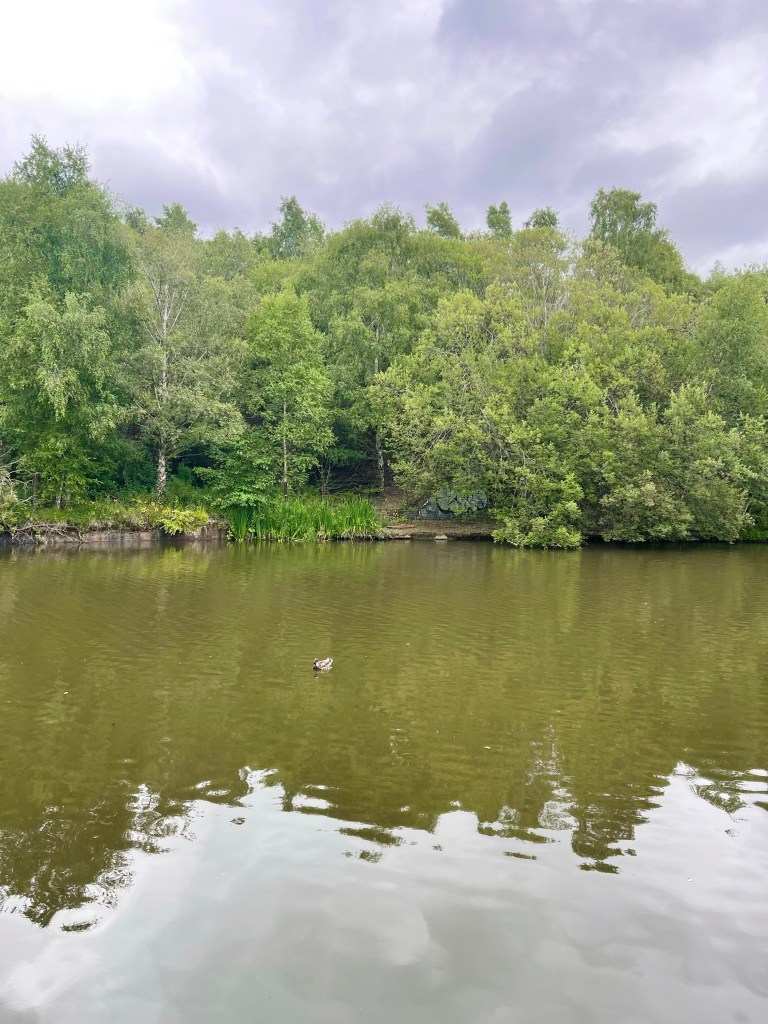
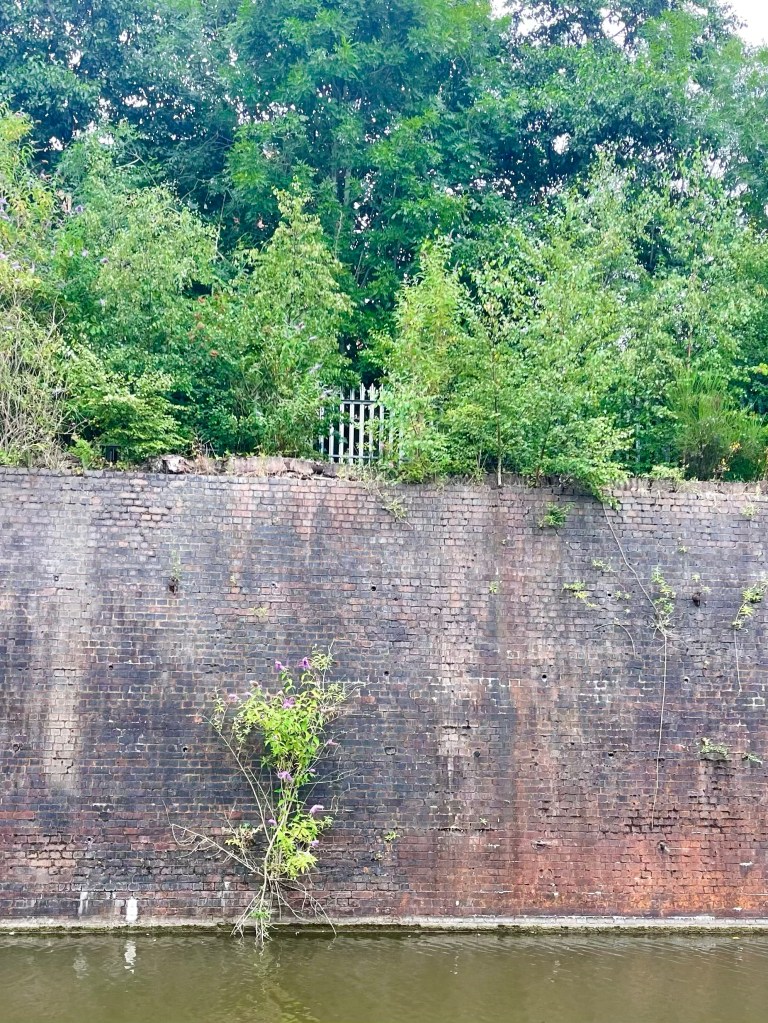
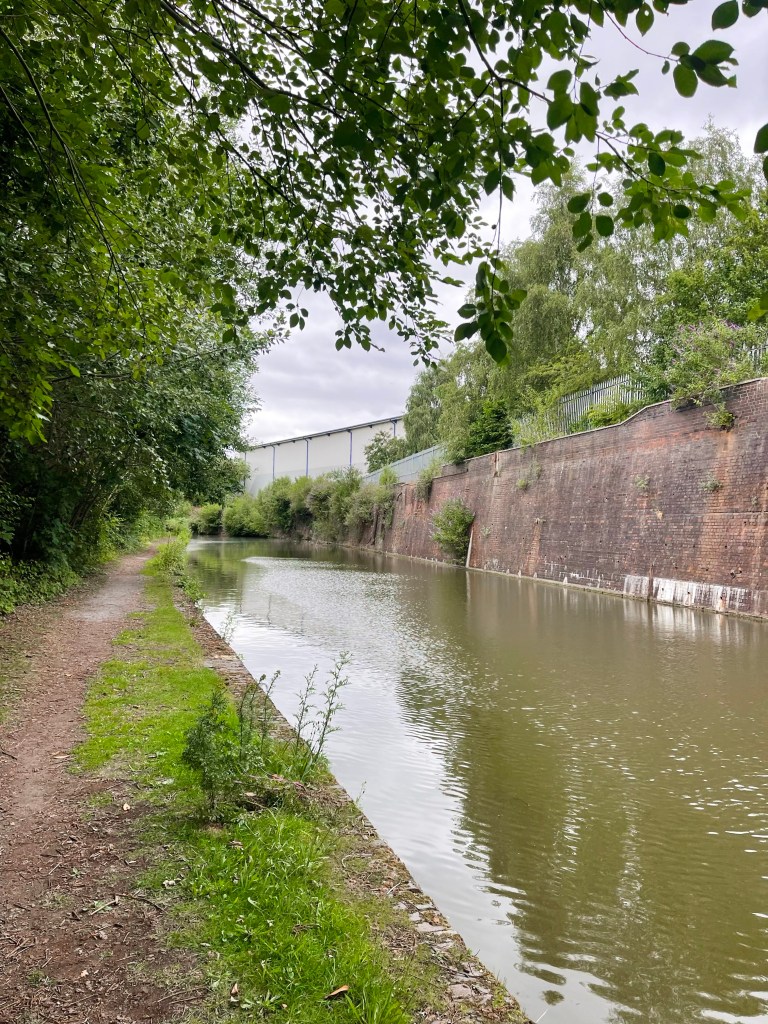
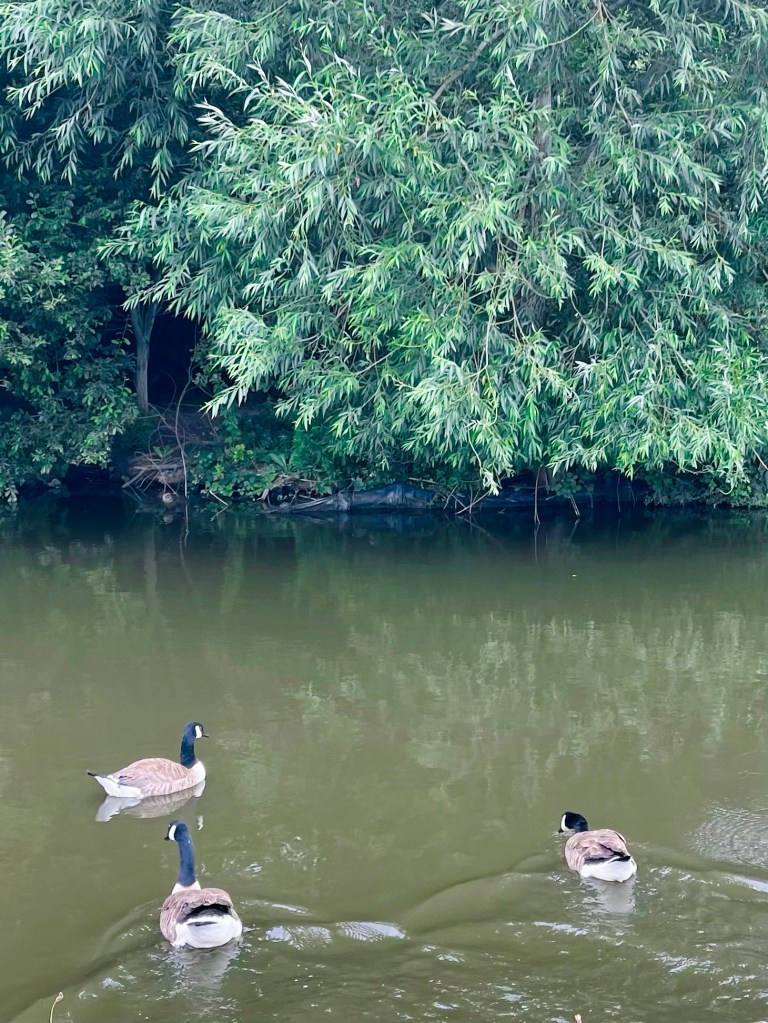
It was a much quieter walk today: no joggers, no dog walkers, just the odd duck taunting Hamish and a faint clattering noise from work going on somewhere in the distance. Very peaceful.
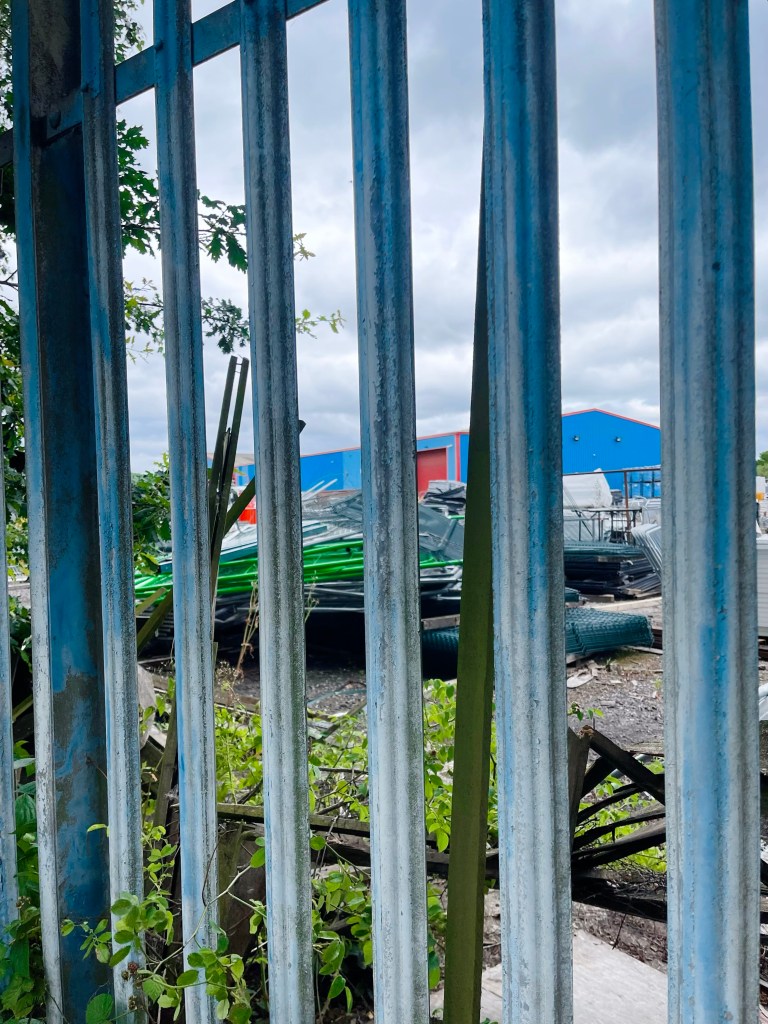
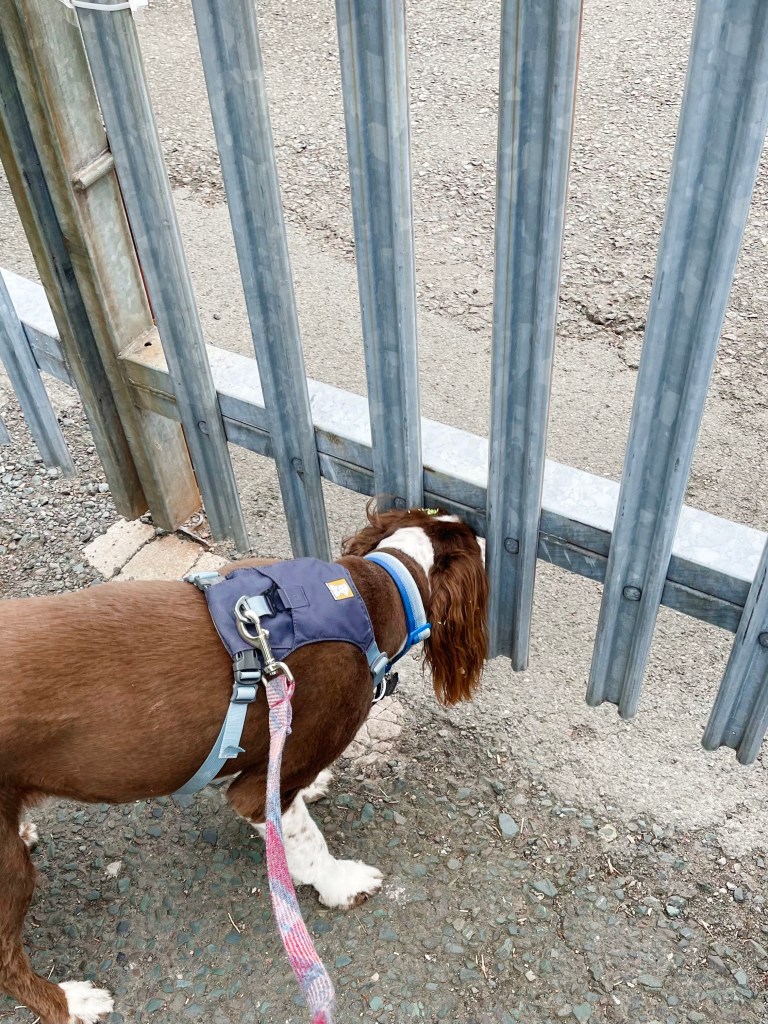
I found Bab nosing through a fence as he spotted various products he recognised. It became episode one of “Who lives in a yard like this?” Dear reader, I’m sure there will be more episodes, so please wait with bated breath. And as he leaned on a brick wall over what looked like a mini canal – which we later found out was a mini weir – we pondered, “What was this mini canal for?” Answers on a postcard, please. Or shouted through a fence, if you’re passing.



Then, almost as quickly as I was wondering how far Hawne Basin was, we were upon the distinctive Coombes Bridge, which leads over to Coombeswood, an area of open grassland next to the canal that was originally the site of coal extraction, landfill and industrial development. It has remnants of ancient woodland and is managed by the Coombeswood Canal Trust. The original Coombes Bridge was removed in 1944 during World War II as an anti-invasion measure to protect the canalside factories, and this steel bridge was installed in 1993. It carries the Monarchs Way footpath across it.
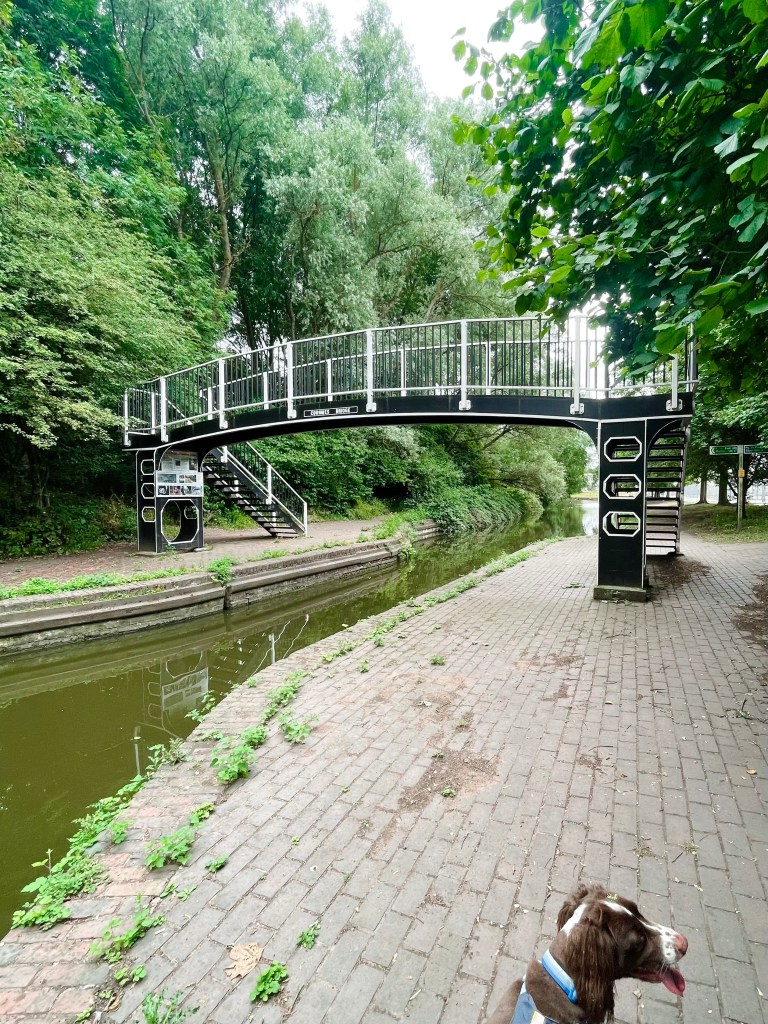

Past the bridge, our footpath came to an abrupt full stop as we were faced with another gate. Bab consulted a local mon packing up his fishing gear, who told us we could not pass by foot. Boat or morning swim, then. We had no boat, and only Hamish seemed genuinely up for the swim, largely because ducks were involved and judgement was not.

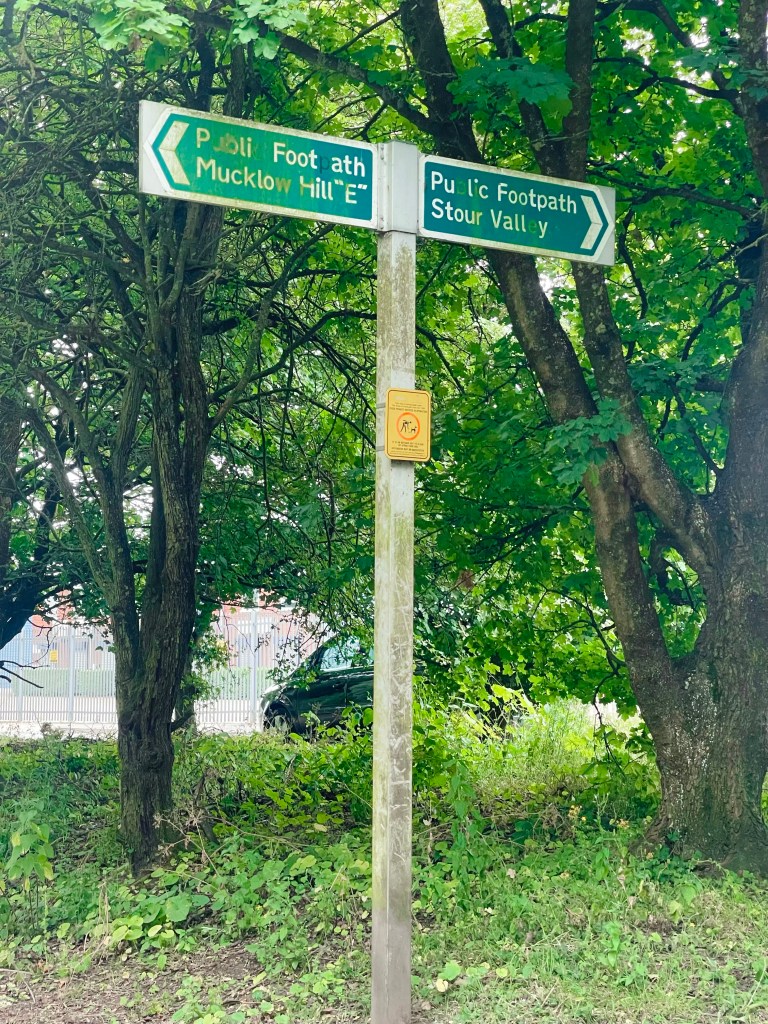
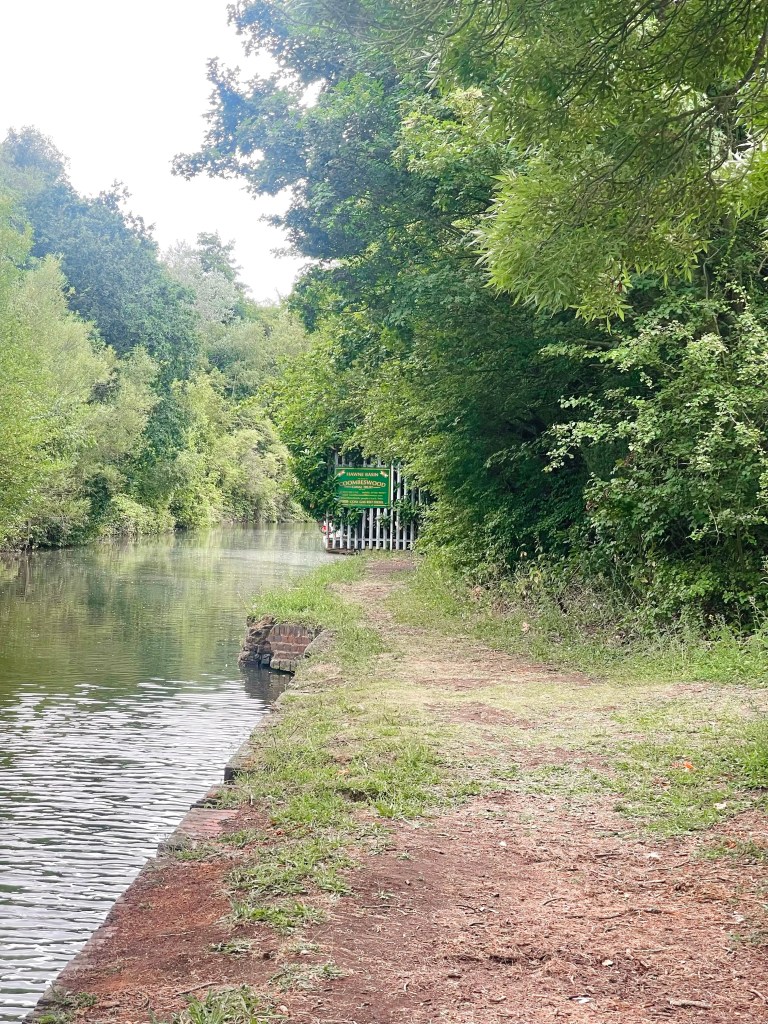
Here, the towpath opened out to the side where a road and industrial estate could be found. As we ventured off the towpath to explore, I realised we were back at our false-start beginning. This was the very same industrial estate Hamish and I had driven to earlier. We poked our noses through the metal gate, but we could not pass. Well, not unless we dared press the doorbell on the gate. We didn’t. Courage has limits.
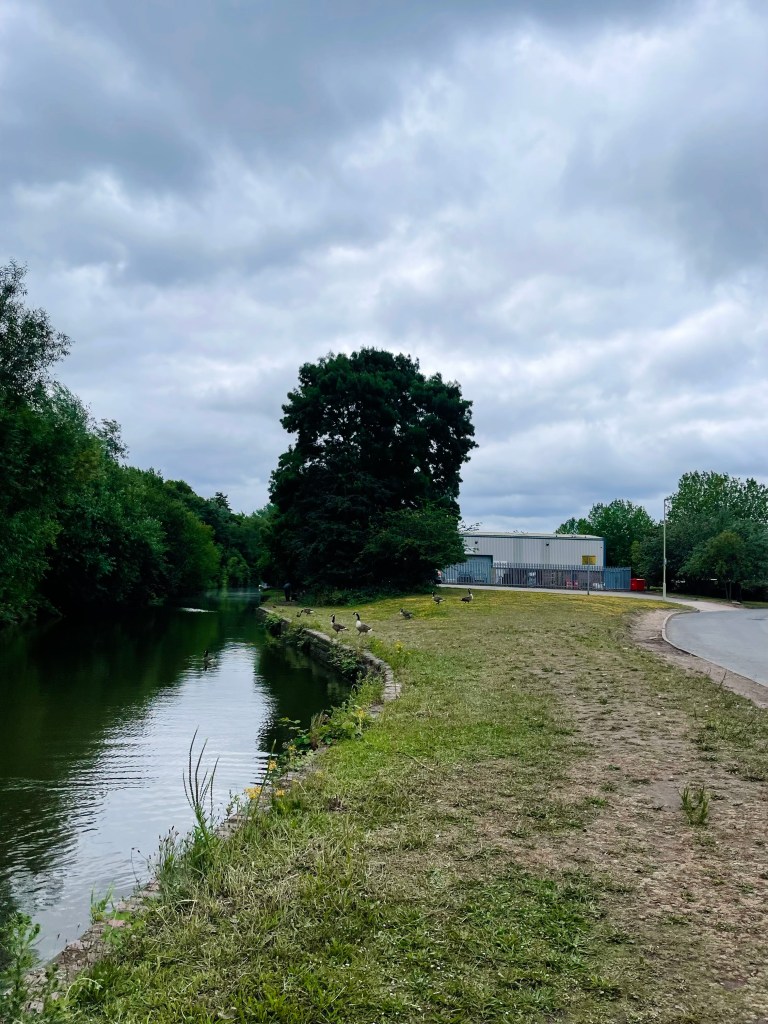



As this was the end of the road for us anyway – Hawne Basin being the end of this stretch – we decided to make our way back to the start. A quick lounge on Coombes Bridge to hydrate, contemplate our life choices and pretend it was all part of the plan, and then we were off again, passing fewer ducks today but plenty of industrial and manufacturing history.
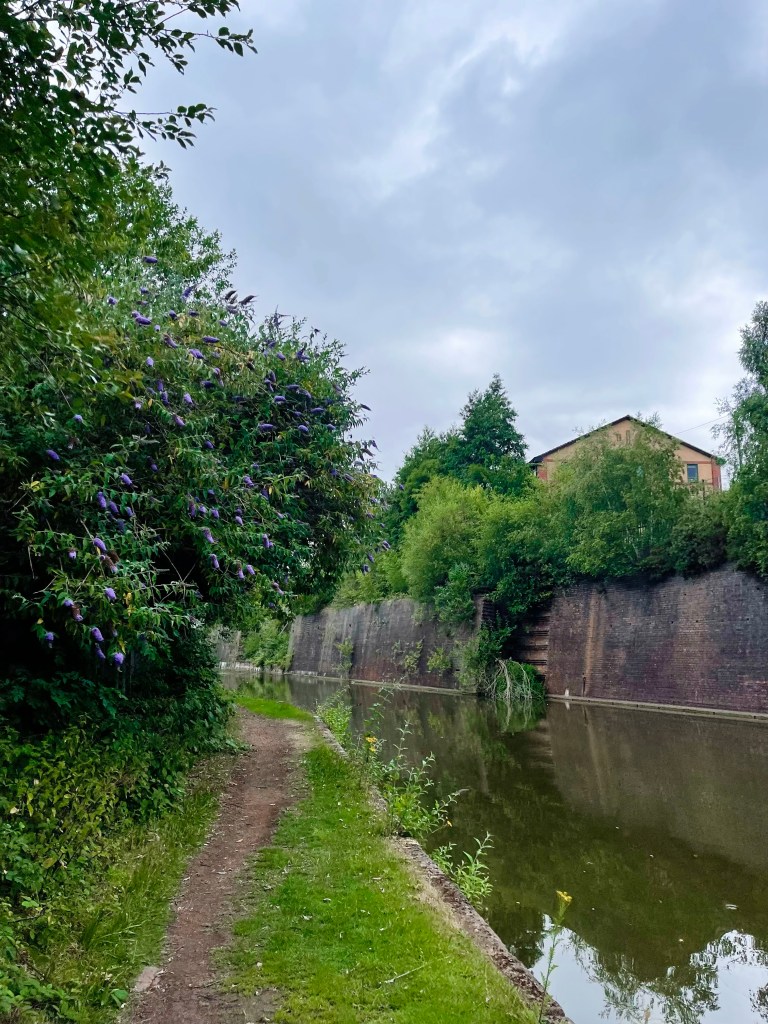


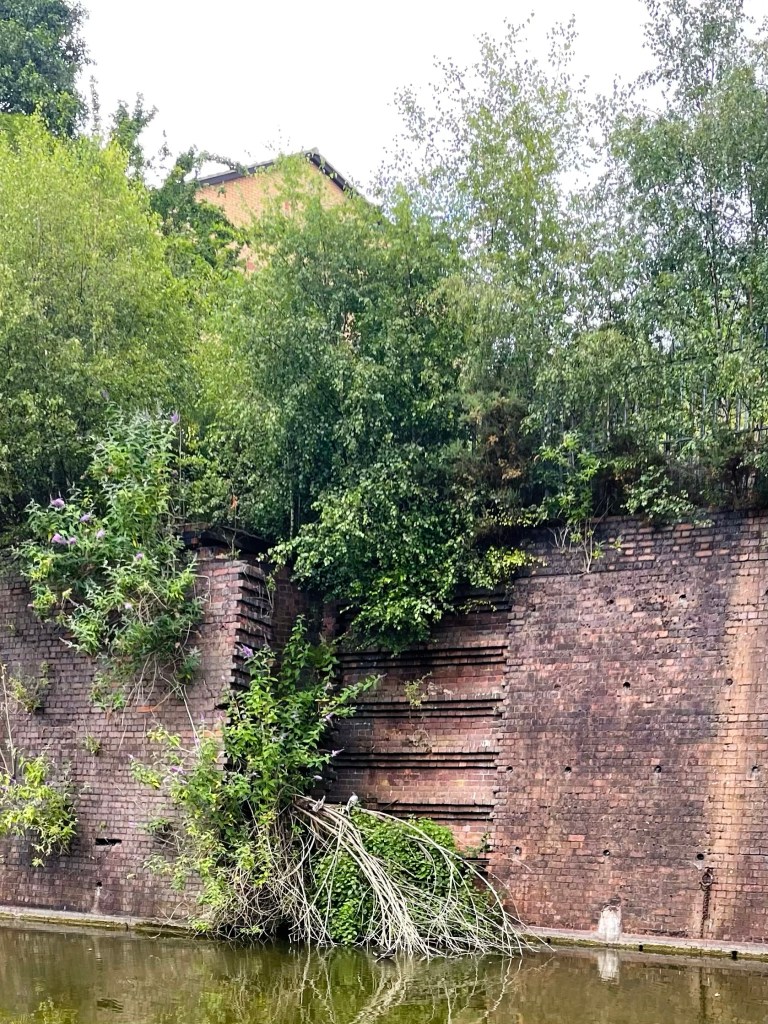

The return involved going back up that slight bonk and, while Bab powered ahead, I allowed Hamish to drag me up with all the dignity of a windsock in a gale. A short wobble today, but an informative one, and once I’d got my breath back and stopped, I was overjoyed to have ticked this stretch of canal off the list.
Back home, out came the canal towpath spreadsheet to log the latest section. Yes, really: a canal towpath spreadsheet. Colour-coded? Don’t tempt me. What have I become? Do not answer that.
Walked:
- From Gosty Hill Tunnel to Hawne Basin
- 2.66km logged on Strava — to follow my progress on Strava, you can find me on there as Katie Ceit (Stourbridge)
Reflections:
- Don’t presume! If a walk is starting or ending at somewhere like a canal basin, check whether you can actually get in and have a nose. Today we couldn’t, although I now know the Coombeswood Canal Trust has open days. I’ll be back, probably with questions and inappropriate enthusiasm.
- Seize the moment! I was excited to walk and felt physically able to do it. That combination is golden, so I need to make the most of it, because there will be days when I can’t – and on those days the spreadsheet can simply glare at me from a safe distance.
Wot we learnt:
- The Stewarts & Lloyds steel works operated from the early 1900s, absorbing Noah Hingley’s earlier ironworks. It was nationalised into the British Steel Corporation in 1968 and subsequently dismantled. My Bab told me this as we walked past. He has worked in the steel industry for years, so he is my personal steel historian – like Wikipedia, but with stronger opinions and better stories.
- The Coombeswood Canal Trust website led me to the “Idle Women” of World War II. This undeserved nickname came from the initials “IW”, for Inland Waterways. These initials were displayed on the badges of women who volunteered to operate canal barges carrying vital supplies through the country’s waterway network. There’s lots of interesting info on Coombeswood website so check it out. They were definitely not idle women and should be fiercely celebrated! Proper wenches!
*Riffy in the Black Country means dirty or unclean.
If you can, please sponsor me and Hamish as we take on this fundraising walk. We promise to keep going, share lots of photos and uncover more random facts about our bostin Black Country. Think of it as donating to charity with added ducks, bricks and light confusion. All while raising money for three fantastic charities supporting people with multiple sclerosis and dementia, as well as mental health, learning disabilities and autism. Fundraising link: www.givewheel.com/fundraising/17386/black-country-canal-challenge.


Leave a Reply